Books about how AI thinks: match the book to your goal
Books about how AI thinks serve different goals. Some explain how machines learn, some examine why AI reasoning fails on tasks humans find easy, and some cover the history behind both traditions. Choose by the question you actually have, then check whether a book distinguishes a demonstration from a reliable capability.
Key facts
- Series scope
- The AI and Human Thought, five books by Tao Zhen published between April and June 2026
- How AI Learns positioning
- 190 pages, written for parents, teachers and general readers; the child-versus-machine comparison is illustrative, not a claim of equivalence
- The Reasoning Machine positioning
- 107 pages; linguistic, mathematical and spatiotemporal reasoning as three lenses, developed through conceptual discussion
- Symbols and Neurons positioning
- 134 pages; narrative history of the symbolic and connectionist traditions
Start with the question, not the shelf
Searches for books about how AI thinks usually come from one of four questions: how does the system learn, why does it fail at reasoning, where did the ideas come from, and what does any of it mean for human judgment. A book that answers one question will disappoint a reader who arrived with another. Decide which question is yours before choosing a title.
Full disclosure: the titles discussed below are the author’s own series. What follows describes scope and audience, not a quality ranking.
“How does it learn?” — mechanism questions
If you want to understand what training actually does, look for a book that separates what a system does from what a demonstration appears to show. Popular accounts often compress years of engineering into one metaphor; that works for orientation and misleads during evaluation.
How AI Learns takes the accessible route, building the explanation around a child’s experience alongside model training. The comparison is illustrative rather than a claim that the two are equivalent, and the book says so. It is written for parents, teachers and general readers, and its landing page includes a chapter outline and a sample so you can judge the register before committing.
“Why does it reason badly?” — limits questions
For most knowledge workers the more useful question is not how AI learns but where its reasoning breaks. Pattern completion is not deduction, and a confident answer is not a verified one.
The Reasoning Machine is organized around three lenses — linguistic, mathematical and spatiotemporal reasoning — and it is short by design. At 107 pages it is closer to a long essay than a textbook: it gives you vocabulary for failure modes without benchmark literacy or implementation detail. Developers and technical evaluators are its stated audience.
“Where did the ideas come from?” — history questions
Symbols and Neurons covers the symbolic-versus-connectionist split as intellectual history. Narrative history answers why researchers believed an approach would work, not how to build it. Treat it as context for reading newer technical work rather than a substitute for it.
“What does it mean for me?” — human questions
Your Brain and AI compares human and machine intelligence through memory, embodiment, emotion and responsibility. It is conceptual rather than technical, aimed at general readers who need to make delegation decisions at work.
The Power of Slow Thinking is the most prescriptive of the group: a proposed method, DEPTH, with practices for keeping human judgment in an AI-assisted workflow. Read it as one author’s proposal to test, not a settled finding.
Questions to ask any book in this space
Whatever you choose, four checks separate useful books from decorative ones:
- Does it distinguish a demonstration from a reliable capability?
- Does it name sources you can follow?
- Does it date itself — does it say when its examples were current?
- Does it admit what it does not cover?
A book that answers your question and passes those checks is worth the evening. One that fails them will still feel informative; that is the failure mode to watch for.
Read a sample before choosing
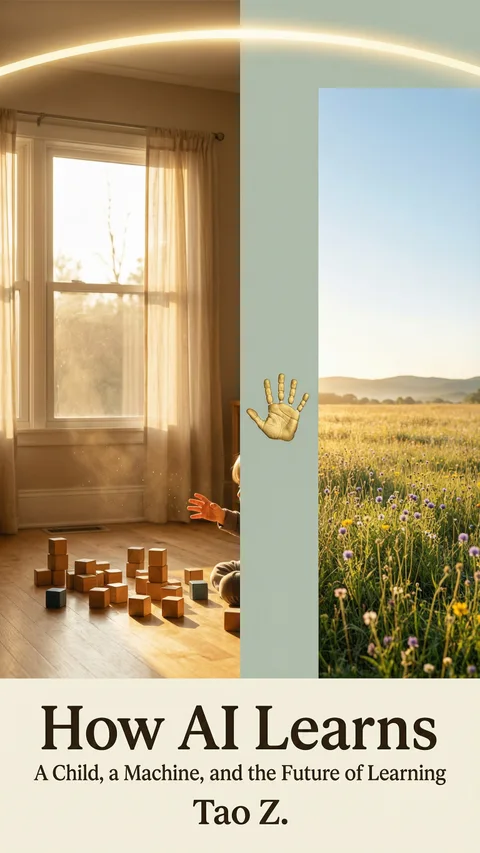
How AI Learns
A narrative comparison of learning through human experience and learning through model training.
Publisher-owned book. Sales support its author. Disclosure.
Sample, chapter outline and limitations →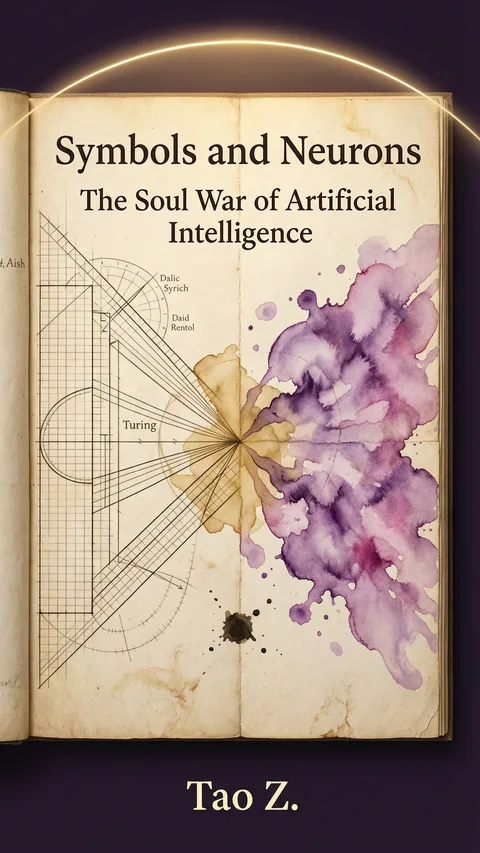
Symbols and Neurons
A narrative introduction to the competing ambitions of symbolic and neural AI.
Publisher-owned book. Sales support its author. Disclosure.
Sample, chapter outline and limitations →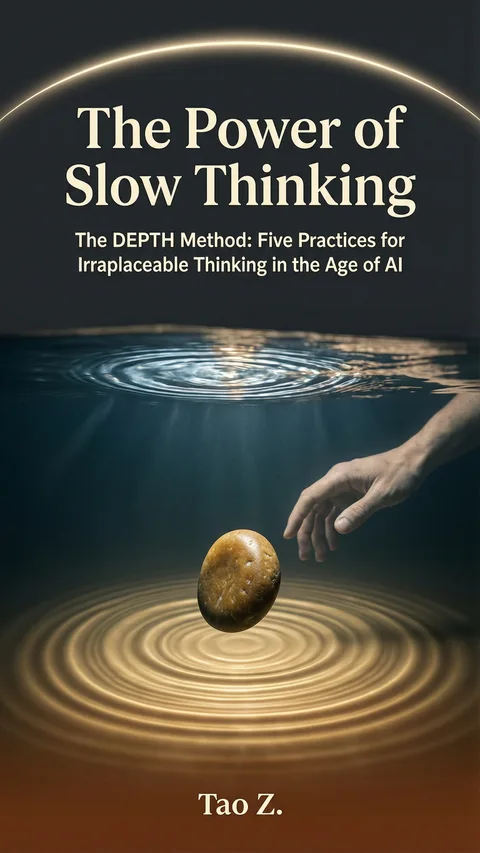
The Power of Slow Thinking
Reflection exercises for a more deliberate relationship with AI-assisted work.
Publisher-owned book. Sales support its author. Disclosure.
Sample, chapter outline and limitations →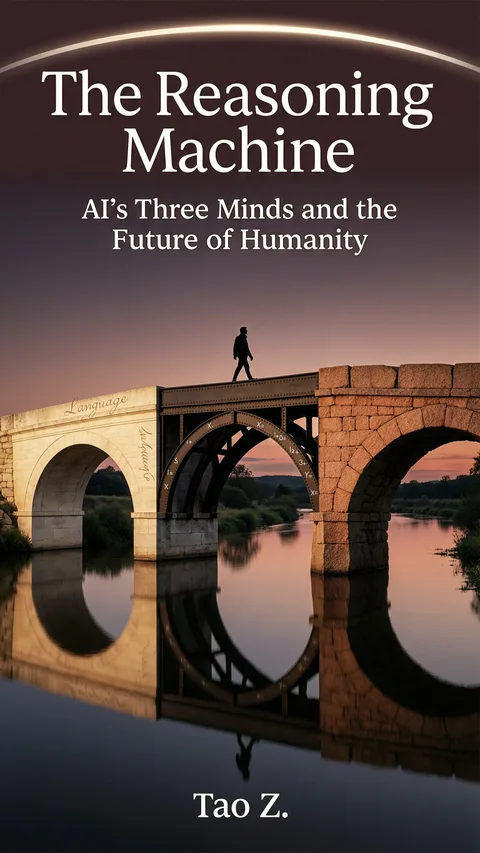
The Reasoning Machine
A three-lens framework for asking better questions about AI reasoning.
Publisher-owned book. Sales support its author. Disclosure.
Sample, chapter outline and limitations →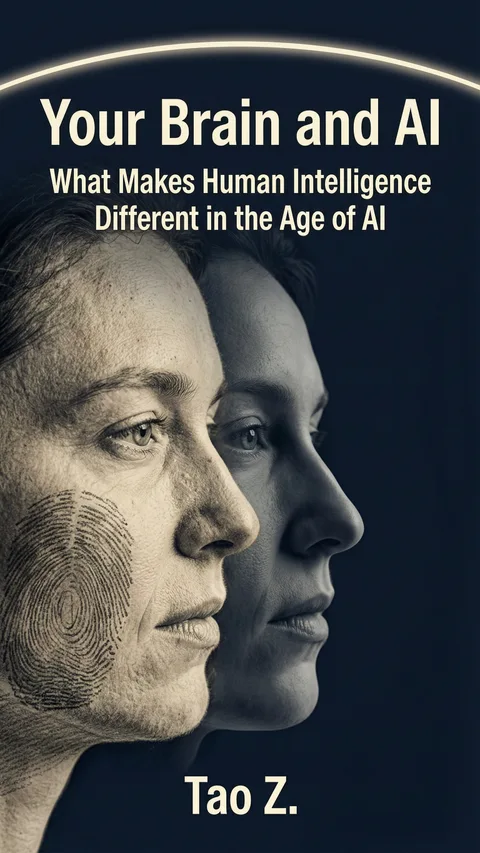
Your Brain and AI
Explore memory, embodiment and responsibility in a conceptual comparison of human and machine intelligence.
Publisher-owned book. Sales support its author. Disclosure.
Sample, chapter outline and limitations →Prepared with AI assistance. Updated 2026-10-28. About our recommendations.